crypto tax filing and compliance USA

Table of Contents

Crypto Tax Filing and Compliance USA (2026): Complete IRS Guide with Real Examples

That’s why understanding crypto tax filing and compliance USA is essential in 2026.

Most investors don’t struggle because they want to avoid taxes—they struggle because the system is complex.

Crypto taxes in the United States are not just about paying what you owe—they’re about understanding what to report, how to calculate it correctly, and how to avoid costly mistakes.

This guide goes beyond basics. You’ll learn how crypto tax filing and compliance USA works in practice, including:

  • Step-by-step filing process
  • Real tax calculation examples
  • Key IRS rules
  • Best tools to simplify everything

All based on how the Internal Revenue Service expects crypto transactions to be reported.

What Crypto Tax Compliance Means in the USA

Crypto tax compliance means:

  • Reporting all taxable transactions
  • Calculating capital gains and income correctly
  • Filing accurate tax returns
  • Keeping detailed transaction records

In the U.S.:

  • Crypto is treated as property
  • Taxes include Capital Gains Tax + Income Tax

 This is the foundation of crypto tax filing and compliance USA.

When Do You Need to File Crypto Taxes?

You must report crypto if you:

  • Sold crypto at a profit
  • Traded one cryptocurrency for another
  • Used crypto to purchase goods or services
  • Earned crypto (staking, mining, salary, airdrops)

 Even losses should be reported to reduce future taxes.

Step-by-Step Crypto Tax Filing Process (Simplified)

Step 1: Collect All Transaction Data

Gather:

  • Exchange history (Coinbase, Binance, Kraken)
  • Wallet activity (MetaMask, Ledger)
  • DeFi and NFT transactions

 Missing data leads to incorrect filing.

Step 2: Calculate Capital Gains & Income

You need to calculate:

  • Capital gains (selling or trading crypto)
  • Income (staking rewards, mining, airdrops)

The Internal Revenue Service allows multiple cost basis methods such as FIFO, LIFO, or Specific Identification.

Step 3: Apply Deductions and Allowances

  • Offset gains with losses
  • Deduct up to $3,000 against ordinary income
  • Carry forward remaining losses

 This is a key optimization step in crypto tax filing and compliance USA.

Step 4: Report Losses

  • Deduct losses from gains
  • Carry forward unused losses indefinitely

Step 5: File Your Tax Return

You must report crypto using:

  • Form 8949 (detailed transactions)
  • Schedule D (summary of gains/losses)

 These are required by the Internal Revenue Service.

Real Example: Crypto Tax Filing USA

Let’s make it practical.

Scenario:

  • Bought Bitcoin for $10,000
  • Sold for $18,000 → Gain = $8,000
  • Loss from altcoins = $3,000

 Final taxable gain = $5,000

This is exactly how crypto tax filing and compliance USA works in real life.

Cost Basis Methods (Advanced but Important)

Unlike the UK pooling system, the U.S. allows flexibility:

  • FIFO (First In, First Out)
  • LIFO (Last In, First Out)
  • Specific Identification

 Choosing the right method can significantly reduce your taxes.

Important US Crypto Tax Deadlines (2026)

Stay compliant with these key dates:

  • April 15 – Tax filing deadline
  • October 15 – Extended deadline (if filed)

Missing deadlines can result in penalties and interest.

Best Tools for Crypto Tax Filing USA

To simplify crypto tax filing and compliance USA, these tools help automate calculations:

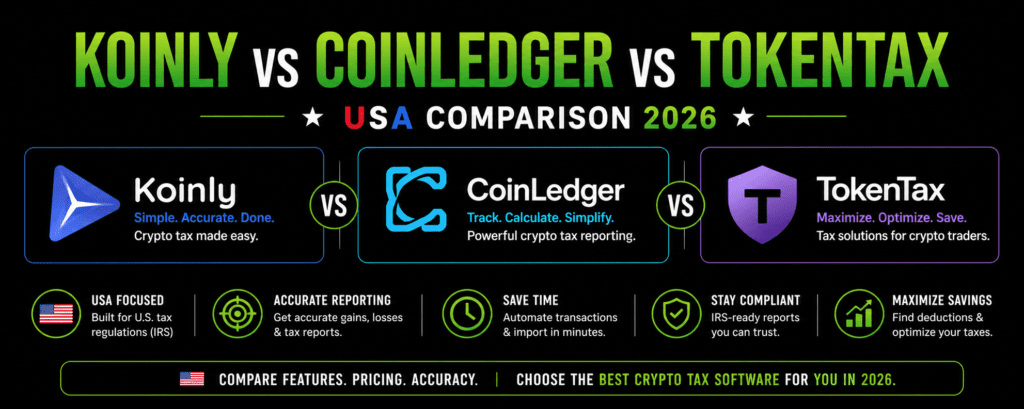
  • Koinly – Advanced reporting
  • CoinTracker – Beginner-friendly
  • TokenTax – Ideal for active traders

 These tools save time and reduce errors.


2026 Updates: What’s Changing in Crypto Tax

Crypto tax regulation in the U.S. is evolving rapidly.

Expect:

  • Increased reporting requirements
  • More exchange data sharing with IRS
  • Stronger enforcement on DeFi and NFTs
  • Expanded tax reporting obligations

Crypto tax filing and compliance USA is becoming stricter every year.

When Should You Hire a Crypto Tax Expert?

Consider professional help if:

  • You trade frequently
  • You use DeFi, NFTs, or staking
  • You run a crypto business
  • You’re unsure about calculations

 Expert guidance can save you time and money.


Latest Articles

Stay Connected

Inquiry Form
crypto tax filing and compliance USA

7 Crypto Tax Accountants: Expert Crypto Accounting & Tax Filing Services

Need reliable crypto accounting and tax filing services? Contact 7 Crypto Tax Accountants today by call or email to get expert support.

Conclusion

Crypto tax filing doesn’t have to be overwhelming—but it does require accuracy and planning.

By following crypto tax filing and compliance USA rules, you can:

  • Avoid IRS penalties
  • Reduce tax legally
  • Stay fully compliant

 The winning formula:
Track everything → calculate correctly → file on time

DISCLAIMER

The information presented in this blog is sourced from publicly available and third-party materials. 7 Crypto Tax Accountants does not claim ownership of this content and provides it for general informational purposes only.

7 Crypto Tax Accountants makes no representations or warranties regarding the accuracy, completeness, or reliability of the information. You should not treat this content as financial, legal, or tax advice.

7 Crypto Tax Accountants is not responsible for any decisions, losses, or damages resulting from the use of this information. Until You  consult with 7 Crypto Tax Accountants before taking any action related to crypto taxation or financial matters.