crypto losses and offsetting USA

Table of Contents

Crypto Losses and Offsetting USA (2026): Real IRS Strategies Investors Use

This is where crypto losses and offsetting USA becomes extremely important.

Let’s be real—crypto trading isn’t always profitable. Most investors in the United States have experienced losses at some point, but very few understand how to use those losses strategically.

Instead of seeing losses as failure, smart investors use them as a legal tax reduction tool under Internal Revenue Service rules.

In this guide, you’ll learn how crypto losses work in the U.S., how to report them correctly, and advanced strategies that many investors overlook.

What Is Crypto Losses and Offsetting USA?

Crypto losses and offsetting USA refers to using capital losses from cryptocurrency transactions to reduce taxable gains under Internal Revenue Service rules.

 In simple terms:
If you lose money on some crypto trades, you can use those losses to reduce the tax you owe on your profits.

Crypto Losses and Offsetting USA: Quick Overview

FeatureDetails
Tax TypeCapital Gains Tax
Loss Offset AllowedYes
Carry Forward LossesYes (unlimited years)
Offset Against IncomeUp to $3,000 per year
Key RuleWash sale rule (currently limited for crypto, evolving)

What Counts as a Crypto Loss in the USA?

A crypto loss only occurs when you dispose of your crypto asset, not when prices drop.

Common taxable loss events:

  • Selling crypto at a lower price
  • Trading one cryptocurrency for another at a loss
  • Using crypto to purchase goods/services after price decline

Important:
If your crypto is still sitting in your wallet, the Internal Revenue Service does NOT treat it as a loss.

How Crypto Losses Reduce Your Tax

Here’s a simple example:

  • Bitcoin profit = $15,000
  • Altcoin losses = $6,000

Net taxable gain = $9,000

This is the foundation of crypto losses and offsetting USA—you are taxed on net gains, not total profits.

Reporting Crypto Losses to the IRS

According to Internal Revenue Service guidelines:

  • Losses must be reported on Form 8949
  • Summarized on Schedule D
  • Accurate transaction records are required

 If you don’t report losses, you cannot use them to offset gains.

Pro Strategy: Combining Loss Harvesting + Income Offset

Here’s how experienced investors reduce taxes:

  • Realize losses before year-end
  • Offset capital gains fully
  • Use remaining losses to offset up to $3,000 of ordinary income
  • Carry forward unused losses indefinitely

 Result: Maximum tax efficiency under IRS rules

Tax Loss Harvesting USA (Advanced Strategy)

Crypto tax loss harvesting USA involves intentionally selling assets at a loss to reduce taxable gains.

Example:

  • Profit = $10,000
  • Loss = $4,000

 Taxable gain = $6,000

 Wash Sale Rule (Important Update)

Currently, crypto is not fully subject to wash sale rules, but this may change.

 That means:

  • You may sell at a loss
  • Rebuy quickly
  • Still claim the loss (for now)

 However, future regulations may close this gap.


Worthless Crypto (Capital Loss Opportunity)

If a crypto asset becomes worthless:

  • You can treat it as a capital loss
  • Must show proof of worthlessness
  • Report it properly to the Internal Revenue Service

 Useful for failed projects or rug pulls.

Best Tools to Track Crypto Losses in the USA

To simplify crypto losses and offsetting USA, these tools help automate tax calculations:

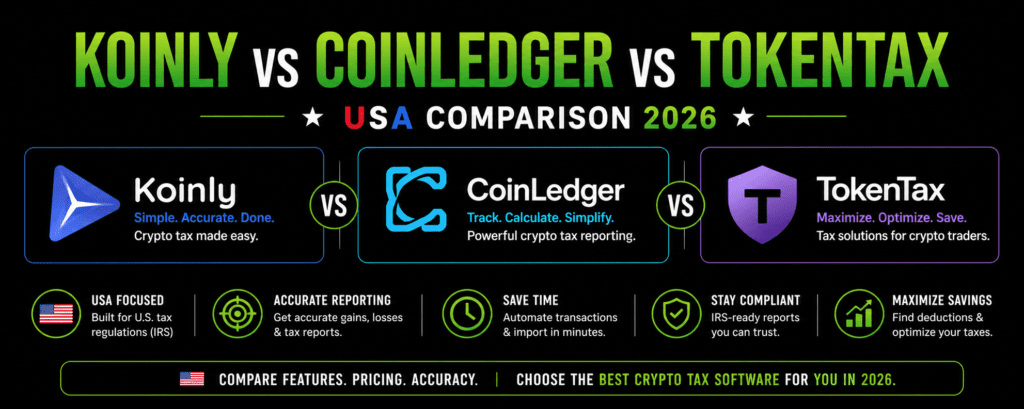
  • Koinly – IRS-ready tax reports
  • CoinTracker – Easy integration with exchanges
  • TokenTax – Advanced reporting for traders

 These tools reduce errors and save time.

Common Mistakes to Avoid

  • Not reporting crypto losses
  • Ignoring crypto-to-crypto trades
  • Incorrect cost basis calculation
  • Poor transaction tracking
  • Forgetting DeFi or NFT activity

 These mistakes can lead to penalties or overpaying taxes.

Real Strategy Example

  • Bitcoin gain = $20,000
  • NFT loss = $8,000
  • Additional planned loss = $3,000

 Total offset = $11,000
 Net taxable gain = $9,000

Then apply income offset if needed.

 This is how crypto losses and offsetting USA works in practice.

Internal Resources (Recommended Reading)

To build a complete tax strategy:

  • Crypto Tax Filing USA guide
  • DeFi Tax USA breakdown
  • Crypto Tax Calculator USA tools

2026 Outlook: Crypto Tax Is Getting Stricter

Expect:

  • Increased IRS reporting requirements
  • More exchange data sharing
  • Stricter enforcement of crypto transactions
  • Better tracking of DeFi and NFTs

 Accurate reporting is becoming essential.


Latest Articles

Stay Connected

Inquiry Form
crypto losses and offsetting USA

7 Crypto Tax Accountants: Expert Crypto Accounting & Tax Filing Services

Need reliable crypto accounting and tax filing services? Contact 7 Crypto Tax Accountants today by call or email to get expert support.

Conclusion

Crypto losses are not just setbacks—they are powerful tax-saving tools.

By understanding crypto losses and offsetting USA, you can:

  • Reduce your tax liability legally
  • Improve overall investment returns
  • Stay fully compliant with IRS regulations

 The key is simple: track everything, report correctly, and plan strategically.

DISCLAIMER

The information presented in this blog is sourced from publicly available and third-party materials. 7 Crypto Tax Accountants does not claim ownership of this content and provides it for general informational purposes only.

7 Crypto Tax Accountants makes no representations or warranties regarding the accuracy, completeness, or reliability of the information. You should not treat this content as financial, legal, or tax advice.

7 Crypto Tax Accountants is not responsible for any decisions, losses, or damages resulting from the use of this information. Until You  consult with 7 Crypto Tax Accountants before taking any action related to crypto taxation or financial matters.