Crypto Tax Rules USA 2026: IRS Capital Gains, Cost Basis & Reporting Guide

Table of Contents

Crypto Tax Rules USA (2026): IRS Regulations, Capital Gains & Reporting Explained

crypto tax rules USA are becoming stricter and more detailed every year. What used to feel like a gray area is now clearly regulated.

But here’s the problem:
Most investors don’t fully understand how crypto is taxed—and that leads to mistakes, overpaying taxes, or even penalties.

That’s why understanding crypto tax rules USA is essential in 2026.

This guide breaks down everything in simple terms—based on how the Internal Revenue Service actually applies crypto tax laws.

What Are Crypto Tax Rules in the USA? (Featured Snippet Section)

Crypto tax rules USA refer to how cryptocurrencies are taxed as property under Internal Revenue Service regulations. This means that buying, selling, trading, or earning crypto can trigger capital gains or income tax depending on the transaction.

 In simple terms:
Every crypto action can have a tax consequence.

General Rules for Crypto Tax in USA

Understanding these core principles is critical:

1. Crypto Is Treated as Property

Crypto is not currency—it’s property.

 This means:

  • Capital gains tax applies
  • Every disposal is taxable

2. Every Transaction Can Be Taxable

Taxable events include:

  • Selling crypto
  • Trading one coin for another
  • Spending crypto
  • Swapping tokens

 Even small trades must be reported.

3. Income vs Capital Gains

Crypto is taxed in two ways:

  • Income Tax → mining, staking, airdrops
  • Capital Gains Tax → selling or trading

 Misclassification can lead to penalties.

4. Fair Market Value Rule

According to Internal Revenue Service guidance:

 You must report the USD value at the time of each transaction.

5. Record-Keeping Is Required

You must track:

  • Transaction dates
  • USD value
  • Wallets and exchanges
  • Fees

 Poor records = incorrect taxes.

Crypto Capital Gains Tax USA

Capital gains apply when you dispose of crypto.

Example:

  • Buy Bitcoin at $10,000
  • Sell at $18,000

 Gain = $8,000 (taxable)

Short-Term vs Long-Term Gains

  • Short-term (<1 year) → taxed as income
  • Long-term (>1 year) → lower tax rates

 This is a major advantage over UK rules.

Cost Basis Rules (VERY IMPORTANT)

Cost basis determines how much tax you pay.

IRS allows multiple methods:

  • FIFO (First In, First Out)
  • LIFO (Last In, First Out)
  • Specific Identification

 Choosing the right method can reduce your tax significantly.

Hidden Insight: Why Cost Basis Matters

Most investors don’t realize:

 Changing your cost basis method can change your tax bill dramatically

Example:

  • FIFO → Higher gains
  • Specific ID → Lower gains

 This is one of the most powerful tax strategies.

 Crypto Tax Reporting Requirements USA

To stay compliant with crypto tax rules USA, you must file:

  • Form 8949 → Detailed transactions
  • Schedule D → Summary of gains/losses
  • Form 1040 → Includes crypto question

 These are mandatory under Internal Revenue Service.

Common Mistakes Investors Make

  • Not reporting crypto-to-crypto trades
  • Ignoring small transactions
  • Using wrong cost basis
  • Not tracking wallets
  • Missing DeFi or NFT activity

 These mistakes often lead to audits.

Best Tools for Crypto Tax USA

To simplify reporting:

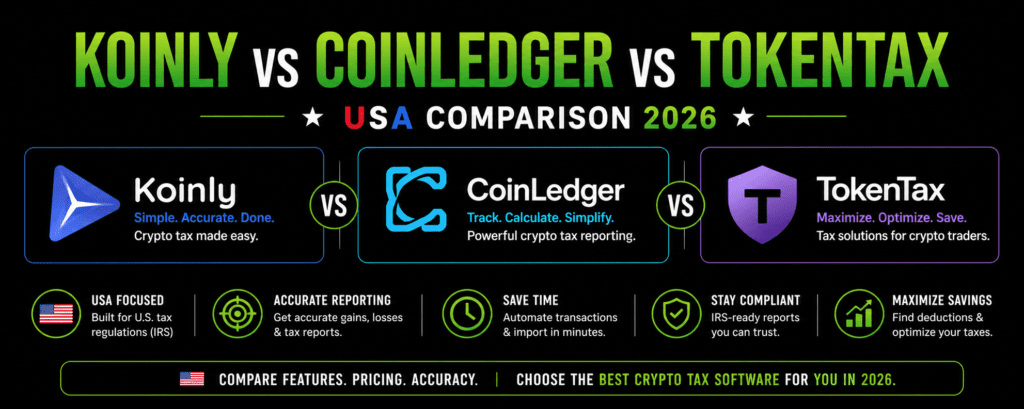
  • Koinly – Advanced tracking
  • CoinTracker – Beginner-friendly
  • TokenTax – Best for active traders

These tools automate calculations and reduce errors.

Pro Strategy: Reduce Crypto Taxes Legally

Smart investors:

  • Hold assets long-term (lower tax rates)
  • Use Specific Identification method
  • Offset gains with losses
  • Track transactions regularly

 This is how professionals reduce tax legally.

2026 Updates: What’s Changing

Crypto regulation is tightening in the U.S.

Expect:

  • More exchange reporting to IRS
  • Increased audits
  • Better DeFi/NFT tracking
  • Stricter compliance enforcement

 Following crypto tax rules USA is more important than ever.

FAQs

Is crypto taxable in the USA?

Yes, crypto is taxable as property.

Do I pay tax on crypto trades?

Yes, every trade is a taxable event.

What is cost basis in crypto?

It’s the original value used to calculate gains or losses.

How do I report crypto taxes?

Using Form 8949 and Schedule D.

Who regulates crypto taxes in the USA?

The Internal Revenue Service.

Latest Articles

Stay Connected

Inquiry Form
Crypto Tax Rules USA 2026: IRS Capital Gains, Cost Basis & Reporting Guide

7 Crypto Tax Accountants: Expert Crypto Accounting & Tax Filing Services

Need reliable crypto accounting and tax filing services? Contact 7 Crypto Tax Accountants today by call or email to get expert support.

Conclusion

Crypto taxes are no longer optional or unclear—they’re structured and enforced.

Understanding crypto tax rules USA helps you:

  • Stay compliant
  • Avoid penalties
  • Reduce taxes legally

 The key:
Track everything, report accurately, and plan ahead.

DISCLAIMER

The information presented in this blog is sourced from publicly available and third-party materials. 7 Crypto Tax Accountants does not claim ownership of this content and provides it for general informational purposes only.

7 Crypto Tax Accountants makes no representations or warranties regarding the accuracy, completeness, or reliability of the information. You should not treat this content as financial, legal, or tax advice.

7 Crypto Tax Accountants is not responsible for any decisions, losses, or damages resulting from the use of this information. Until You  consult with 7 Crypto Tax Accountants before taking any action related to crypto taxation or financial matters.