Centralized vs Decentralized Exchanges: Which is Better for Crypto Trading?
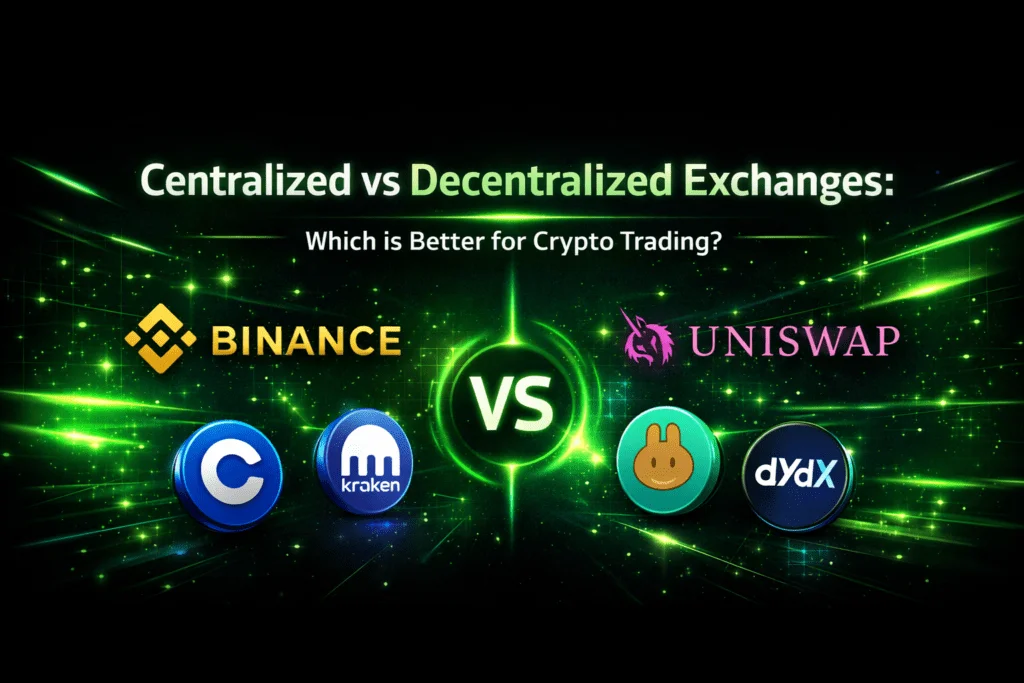
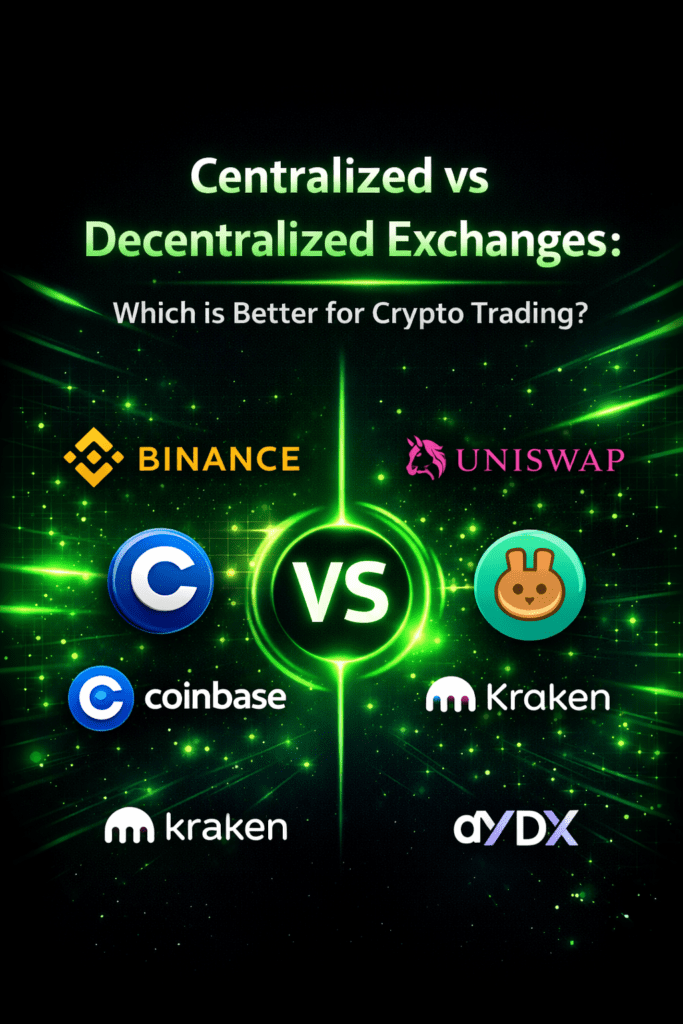
The debate around Centralized vs Decentralized Exchanges shapes how you approach crypto trading in modern markets. Traders compare Centralized vs Decentralized Exchanges to understand differences in security, control, liquidity, and user experience. A centralized exchange (CEX) operates under a company that manages transactions, while a decentralized exchange (DEX) allows peer-to-peer trading through smart contracts. This distinction makes Centralized vs Decentralized Exchanges a critical decision for both beginners and advanced users.
When analyzing Centralized vs Decentralized Exchanges, you should evaluate factors such as custody of funds, transaction speed, fees, and regulatory compliance. Centralized platforms like Binance and Coinbase offer high liquidity and ease of use, while decentralized platforms like Uniswap provide greater privacy and control. The comparison of Centralized vs Decentralized Exchanges also highlights risk differences, including hacking risks on CEXs and smart contract vulnerabilities on DEXs.
As the crypto ecosystem evolves, Centralized vs Decentralized Exchanges becomes more relevant for traders seeking efficiency and security. Understanding Centralized vs Decentralized Exchanges helps you choose the right platform based on your trading goals and risk tolerance.
What is a Centralized Exchange (CEX)?
Definition
A centralized exchange (CEX) is a platform operated by a company that acts as an intermediary between buyers and sellers.
Popular examples include:
Binance
Coinbase
Kraken
How CEX Works
When you use a centralized exchange:
You deposit funds into the platform
The exchange holds custody of your assets
Trades are executed through an internal system
Advantages of Centralized Exchanges
Easy to Use
CEX platforms are beginner-friendly with simple interfaces.
High Liquidity
Large trading volumes ensure fast transactions and better pricing.
Customer Support
Users can access help if they face issues.
Advanced Features
Includes margin trading, futures, and staking options
Disadvantages of Centralized Exchanges
Lack of Full Control
You don’t control your private keys your funds are held by the exchange.
Security Risks
CEX platforms can be hacked, leading to potential loss of funds.
KYC Requirements
Most exchanges require identity verification.
What is a Decentralized Exchange (DEX)?
Definition
A decentralized exchange (DEX) allows users to trade directly from their wallets without an intermediary.
Popular examples include:
Uniswap
PancakeSwap
SushiSwap
How DEX Works
DEX platforms operate using smart contracts:
Users connect their crypto wallets
Trades occur directly on the blockchain
No central authority controls the process
Advantages of Decentralized Exchanges
Full Control
You retain ownership of your private keys and funds.
Enhanced Security
No central server reduces hacking risks.
Privacy
Most DEX platforms do not require KYC.
Permissionless Access
Anyone with a wallet can trade.
Disadvantages of Decentralized Exchanges
Complex for Beginners
DEX platforms can be difficult to navigate.
Lower Liquidity
Some tokens may have limited trading volume.
Transaction Fees
Network fees (gas fees) can be high during congestion.
Limited Features
Fewer advanced trading tools compared to CEX.
Centralized vs Decentralized Exchanges: Key Differences
Comparison Table
Control of Funds
CEX: Controlled by exchange
DEX: Controlled by user
Security
CEX: Higher hacking risk
DEX: More secure (no central point)
KYC Requirements
CEX: Required
DEX: Not required
Speed & Liquidity
CEX: Faster and more liquid
DEX: Slower with variable liquidity
Fees
CEX: Trading fees
DEX: Network (gas) fees
Which Exchange is Better for You?
For Beginners
Centralized exchanges are better because:
Easy to use
Customer support available
Simple buying process
Best Choice: CEX
For Privacy & Control
Decentralized exchanges are ideal if you:
Want full control over funds
Prefer anonymity
Avoid KYC requirements
Best Choice: DEX
For Advanced Traders
CEX platforms offer:
Advanced trading tools
Higher liquidity
Faster execution
Best Choice: CEX
Hybrid Strategy
Many experienced traders use both:
Smart Approach:
Use CEX for buying/selling
Use DEX for long-term holding and DeFi
Future of Crypto Exchanges
The future is moving toward hybrid exchanges that combine:
Security of DEX
Convenience of CEX
With advancements in blockchain technology, decentralized platforms are expected to become more user-friendly and scalable.
The information presented in this blog is sourced from publicly available and third-party materials. 7 Crypto Tax Accountants does not claim ownership of this content and provides it for general informational purposes only.
7 Crypto Tax Accountants makes no representations or warranties regarding the accuracy, completeness, or reliability of the information. You should not treat this content as financial, legal, or tax advice.
7 Crypto Tax Accountants is not responsible for any decisions, losses, or damages resulting from the use of this information. Until You consult with 7 Crypto Tax Accountants before taking any action related to crypto taxation or financial matters.